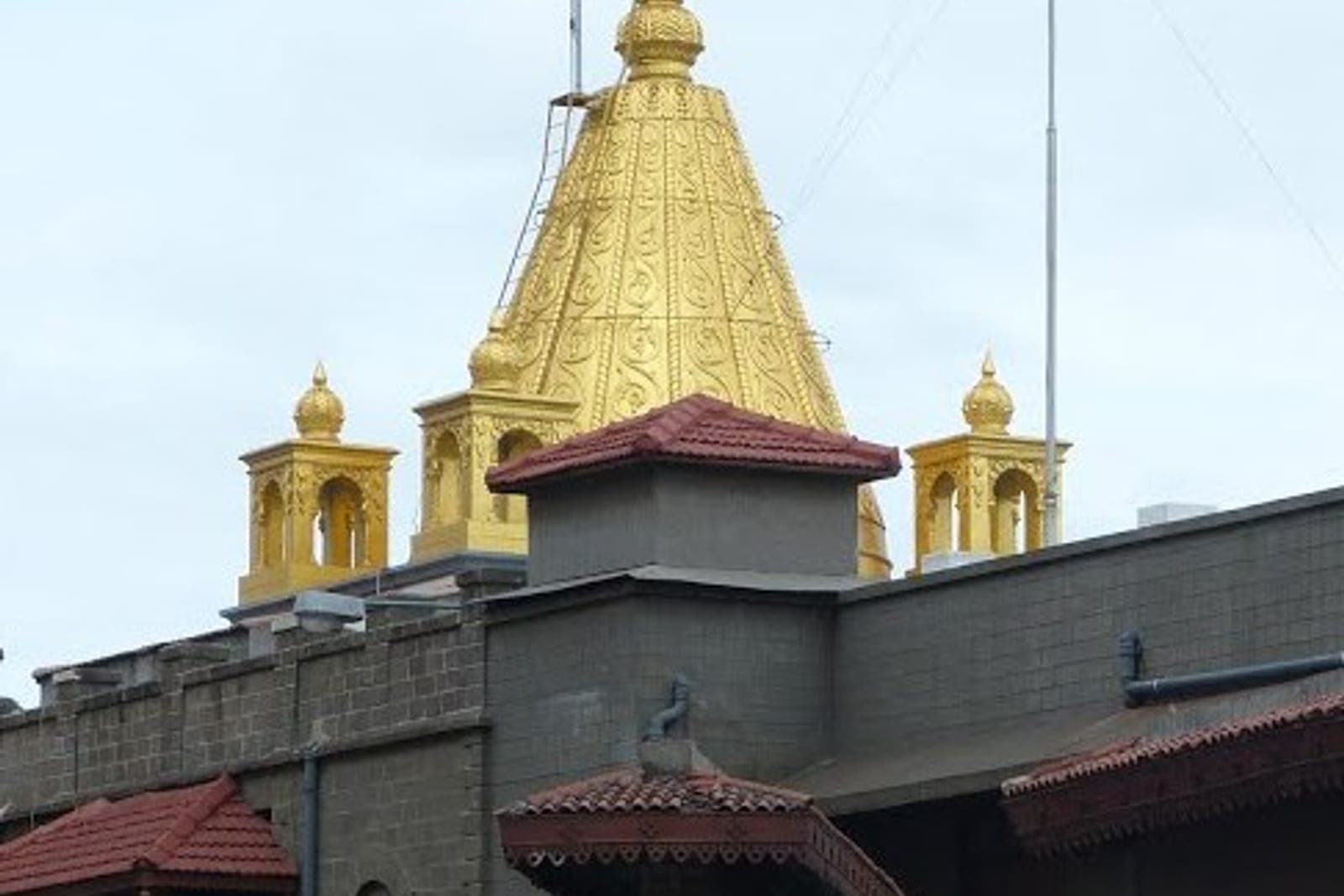
The queue at Shirdi's Samadhi Mandir starts forming in the dark. By the time the 4:30am Kakad aarti begins, the marble hall is already packed shoulder to shoulder, and the smell of fresh marigold and incense hangs over everything. This is the heart of a Shirdi Trimbakeshwar yatra — one of the most-walked pilgrim routes in western India, and one we run on a tight, sensible loop from Mumbai or Pune.
Over three days you combine two very different kinds of devotion. Trimbakeshwar gives you one of the twelve Jyotirlingas — a Shiva shrine of the highest order. Shirdi gives you Sai Baba, his tomb, the mosque he lived in, and the small lanes where his story actually happened. We add Shani Shingnapur on the way out for good measure.
What a Shirdi Trimbakeshwar yatra actually covers
This isn't a leisurely sightseeing trip. It's a darshan circuit, planned around temple timings rather than meal times. Here's how the three days fall.
Day one — Trimbakeshwar, then Shirdi. We pick you up from Mumbai or Pune and drive into Maharashtra's pilgrimage country, stopping at the Trimbakeshwar Shiva Temple near Nashik. This is one of the 12 Jyotirlingas, and the lingam here is unusual — three faces representing Brahma, Vishnu and Shiva. The temple sits at the source of the Godavari river, which adds to its weight for the devout. We then continue to Shirdi and ease in with a few local temple visits in the evening.
Day two — the full Shirdi day. After breakfast you have a complete day for Baba. The Shri Sai Baba Samadhi Mandir, built over his tomb, is the centre of it all. From there you walk to Dwarkamai, the old mosque where Sai Baba lived for sixty years and where the sacred fire (dhuni) still burns. Then Chavadi, where his body was carried in procession, and the other landmarks of his life — Gurusthan, Lendi Baug, the well. It's a slow, reflective day on foot.
Day three — Shani Shingnapur, then home. After checkout we drive to the village of Shani Shingnapur, famous for its powerful open-air Lord Shani shrine and for the local custom of houses without doors. After darshan, it's the return drive to Mumbai or Pune.
Darshan tips that actually save you time
Queues are the single biggest variable on this trip. A little planning turns a three-hour wait into forty minutes.
- Go early, always. The Samadhi Mandir opens around 4am for the Kakad (morning) aarti. The hour before sunrise is the calmest darshan of the day. Mid-morning and evening are the worst.
- Know the four aartis. Shirdi runs Kakad (dawn), Madhyan (noon), Dhoop (sunset) and Shej (night) aarti daily. Timing your visit around one of them is the whole point — but the temple briefly closes the main queue during each aarti, so check before you join.
- Free vs paid darshan. Shirdi has a free general queue and a paid fast-track pass you can book online through the Sansthan trust. The paid pass is worth it on weekends and festival days; on a quiet weekday morning the free queue moves fine.
- Dress modestly. Covered shoulders and knees for everyone. You'll be barefoot inside, so wear shoes that slip off easily and consider socks for hot marble.
- Photography. Cameras and phones are generally not allowed inside the main sanctums, and there can be a camera fee elsewhere. Assume your phone stays in the cloakroom.
At Trimbakeshwar, note that only men in traditional dhoti are allowed into the inner sanctum for direct touch of the lingam; everyone else has darshan from the hall. That catches a lot of first-timers off guard.
Best time to go
October to March is the sweet spot — dry, and cool enough to stand in a slow queue without wilting. April and May get genuinely hot in this part of Maharashtra. The monsoon (June to September) makes Trimbakeshwar and the Godavari source beautifully green, but expect rain and heavier crowds.
Avoid Guru Purnima, Ram Navami and Vijayadashami unless crowds are the point of your pilgrimage — Shirdi draws enormous numbers on those festival days, and waits stretch for hours.
Where the tour starts, and what's included
We run this as a private trip in a sedan, with flexible pickup and drop in either Mumbai or Pune — your ex-point. It's two nights in a 3-star Shirdi hotel with daily breakfast, all hotel taxes, and every temple-circuit transfer in the itinerary. You can see the full day-by-day on our Shirdi & Trimbakeshwar yatra page.
I'll be straight about what isn't in the price, so there are no surprises: flights or trains to reach Mumbai or Pune are on you, as are lunches, dinners and personal expenses. Donations, pooja offerings and any VIP darshan tickets are extra by their nature, and so is GST and any camera fee charged inside a temple. Budget a little cash for offerings and the prasad counter.
A yatra isn't measured in kilometres covered but in queues you were patient enough to stand in. Come for the darshan, not the sightseeing, and the trip makes complete sense.
Who this trip suits
This is for pilgrims and the spiritually curious — Sai Baba devotees first and foremost, and anyone wanting to tick a Jyotirlinga off the twelve. It's compact, so it works well for working families with a long weekend, and for older relatives who want darshan without a punishing schedule.
It suits you less if you're after beaches, nightlife or a relaxed holiday pace. The days are built around early mornings and temple etiquette, not lie-ins.
If devotional travel is your thing, you might also enjoy our writing on the riverside rituals of a Varanasi Ganga aarti, or — for a very different tradition — the quiet Marian devotion of a Walsingham pilgrimage.
One last practical note: carry a small bag with a water bottle, your darshan pass printout, and a cloth to cover your head if you wish. Leave the rest in the car. The lighter you travel through these temples, the more present you'll be when Baba's tomb finally comes into view.
Ready to plan your trip?
Let our travel experts create the perfect itinerary for you.